
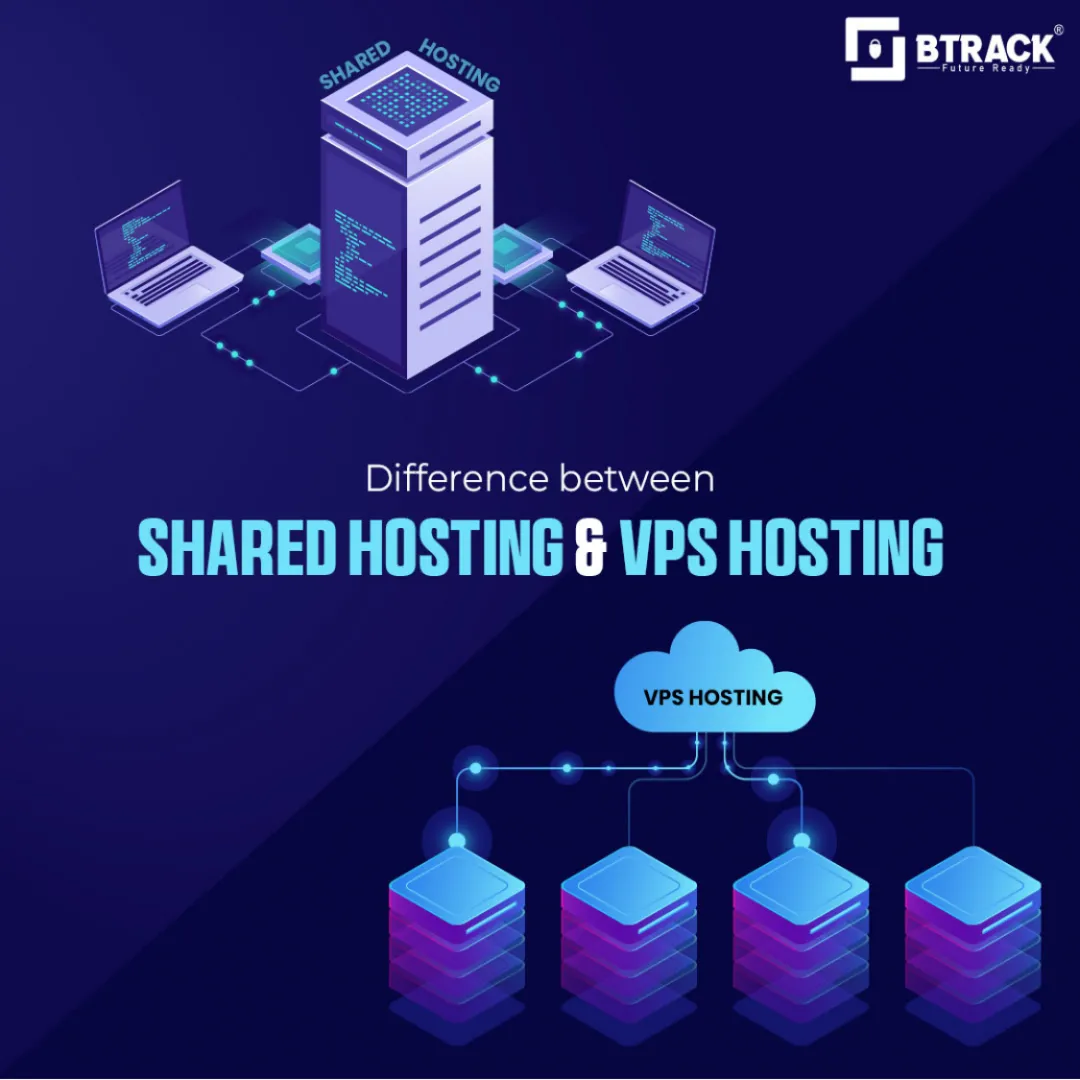
What's the Difference between Shared Hosting and VPS Hosting
What's the Difference between Shared Hosting and VPS Hosting
Selecting the best hosting provider for your website is an important choice that will affect its scalability, performance, and user experience in general. Managed VPS hosting (virtual private server hosting) enhances the already substantial advantages of virtual private servers by providing a higher level of expert management and assistance.
In a managed VPS setup, the managed website hosting services hosting company handles routine server maintenance, freeing users to concentrate on their websites or apps. When it comes to hosting alternatives, shared hosting and VPS hosting are two of the most popular choices.
Knowing the distinctions between the two will enable you to select the option that best meets your requirements.
What is Shared Hosting?
In shared hosting, several websites are housed on a single physical server. Many users use a single server's resources, lowering the cost. Each user is given a portion of a server where they can store the files for their websites.
When a website uses shared hosting, it physically shares a server with one or more other websites.
What is VPS Hosting?
A virtual private server, or VPN, is a computer that houses all the data and applications needed to operate a website or service. Because it only uses a fraction of the physical resources that the server is built upon and is overseen by a third party, it is known as virtual.
A firewall, such as Windows Firewall for Windows-based VPSs or IPTables for Linux-based VPSs, is typically pre-installed in VPS settings. These firewalls regulate incoming and outgoing traffic according to preset criteria, helping to safeguard your server against potential threats, DDoS attacks, and illegal access.
VPS hosting provides dedicated server space with allocated resources, giving you more flexibility and customization than shared hosting.
Managed VPS Hosting and Cloud Computing
VPS gives you access to more resources, so you can scale the resources as your business expands. It has numerous potential advantages, including increased performance, enhanced security, uptime guarantee, and dependability. An advanced cloud VPS hosting company in India, BTrack is a top supplier of dependable, scalable, and on-demand cloud services.
It provides functionality for disaster recovery and backup. Data loss in the case of an emergency, such as a hardware breakdown, malicious attacks, or even a simple user error, can be avoided by storing data in the cloud rather than locally.
Key Differences between Shared Hosting and VPS Hosting
The following are the key differences between Shared Hosting and VPS Hosting:
- Suggested H4: Resources Allocation
- Shared Hosting: In shared hosting, all users share resources on a single server. Thus, a website with a lot of traffic may affect how well other websites perform.
- VPS Hosting: VPS Hosting, on the other hand, guarantees dependable and steady performance by assigning specific resources to every virtual server.
- Suggested H4: Performance
- Shared hosting: Appropriate for modest to medium-traffic websites. However, as your website becomes more prominent and has more visitors, you may notice decreased speed and slower loading times.
- VPS Hosting: Because of the dedicated resources, it performs better and can manage significant levels of traffic more effectively.
- Suggested H4: Authority and Customizing
- Shared hosting: It is perfect for novices or those who don't require advanced features because it gives you limited control over server configurations and program installations.
- VPS hosting: It gives users root access, enabling them to install custom applications, alter settings, and personalize their server environment to suit their unique requirements.
- Suggested H4: Safety
- Shared hosting: It is less safe than managed hosting.
- VPS hosting: Although both VPS and shared hosting include security protections, the isolated environment of VPS hosting offers a higher level of security. A security breach on one site in shared hosting may have an impact on other sites hosted on the same server.
By maintaining a physical separation between each virtual server, VPS Hosting reduces this danger.
- Suggested H4: Cost
- Shared hosting: It is a popular alternative for individuals, small enterprises, and startups due to its lower cost.
- VPS hosting: Though VPS hosting is more expensive, it is still a wise investment for expanding websites that need more resources and flexibility because it provides superior speed, control, and security.
Conclusion
The decision between managed VPS hosting and shared hosting is based on your technical proficiency, financial constraints, and unique requirements. Small websites with low to moderate traffic might benefit from shared hosting, which is both affordable and easy to use.
On the other hand, VPS Hosting offers superior security, control, and speed, which makes it perfect for expanding websites with more intricate needs and increased traffic. Feel free to connect with BTRACK, an advanced cloud VPS hosting company in India.