
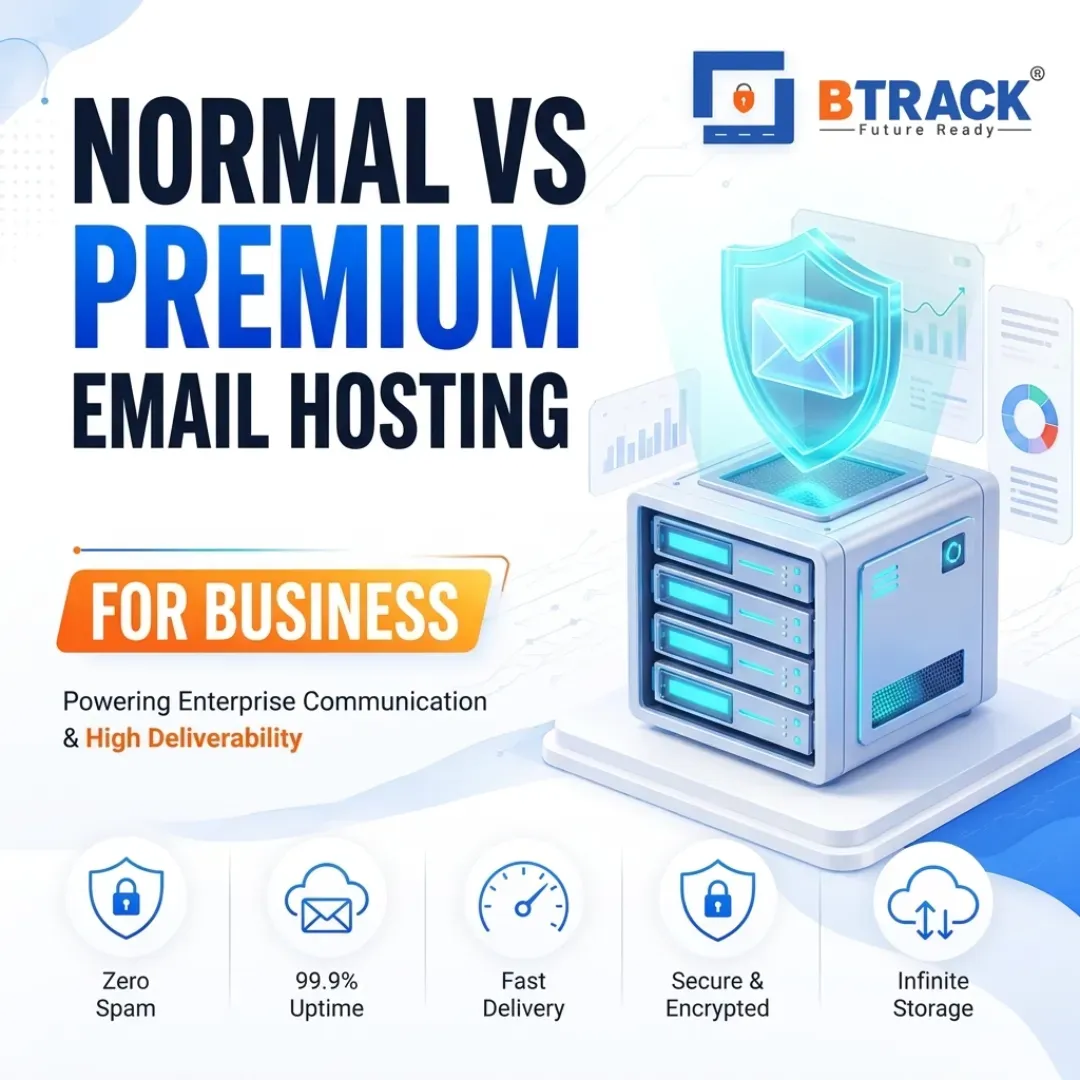
Normal Email Hosting vs. Premium Email Hosting: Which is Right for Your Business?
Email is still where most business decisions get made — contracts get confirmed, invoices go out, and clients expect a reply. Yet a surprising number of companies run this critical function on whatever email accounts came free with their web hosting plan, without ever questioning whether that setup can keep pace with the business.
At some point, most growing organizations face the same question: is it worth moving from a basic, bundled mailbox to a dedicated premium email hosting platform? The answer depends on how much your team relies on email, how sensitive your data is, and how much downtime or a missed message would actually cost you.
This guide walks through both options so you can make that call with a clear picture of the trade-offs.
What Normal Email Hosting Actually Offers
Normal (or standard) email hosting usually rides along with a shared web hosting package — the kind of plan built primarily to host a website, with a handful of mailboxes thrown in as a convenience. It works, but it wasn't designed to be the centerpiece of your business communication.
Where it holds up:
- No extra cost. Since mailboxes are bundled into your existing web hosting invoice, there's nothing new to budget for.
- Fast to set up. For a freelancer, a personal project, or a very early-stage startup that just needs a professional-looking @yourdomain.com address, it does the job without any learning curve.
Where it tends to fall short as a business grows:
- Storage is shared, not dedicated. Mailboxes typically draw from the same disk allocation as your website files. A few overstuffed inboxes can slow your site down or start bouncing new mail.
- Security is basic by design. Standard spam and antivirus filtering is built for general use, not for catching the more targeted phishing attempts that businesses increasingly face.
- Deliverability depends on your neighbors. Shared hosting environments mean shared IP addresses. If another account on that same server gets flagged for spam, your legitimate emails can get caught in the same reputation problem and land in spam folders that aren't yours to control.
What Sets Premium Email Hosting Apart
Premium email hosting separates your inbox from your website entirely. Instead of sharing resources with whatever else is running on a shared server, it runs on infrastructure built specifically to handle business messaging at scale — with stronger security controls, dedicated storage, and tools built for teams rather than individuals.
What businesses typically gain:
- Infrastructure built for uptime. Dedicated platforms are architected with redundancy in mind, so unplanned outages are far less common than on shared, general-purpose hosting.
- Layered security. Features such as multi-factor authentication, encrypted transmission, and more sophisticated spam and malware filtering give sensitive correspondence meaningfully better protection.
- Room to grow. Mailbox storage is usually allocated per user, and at a scale that shared hosting simply isn't set up to offer.
- Built-in collaboration. Many premium platforms bundle shared calendars, cloud document editing, and video conferencing directly alongside email, reducing the number of separate tools your team has to juggle.
The trade-off: premium hosting comes with a recurring per-user subscription cost. For most businesses handling client-sensitive communication, the gains in reliability, security, and productivity offset that cost fairly quickly — but it is a genuine budget line, not a free upgrade.
Normal vs. Premium Email Hosting: A Side-by-Side Comparison
| Feature | Normal Email Hosting | Premium Email Hosting |
|---|---|---|
| Storage | Limited, shared with website files | Dedicated allocation per user, typically much larger |
| Reliability | Varies with shared server load | Built on infrastructure designed for consistent uptime |
| Security | Basic spam filtering | Stronger deliverability controls and reputation management, plus features like MFA |
| Deliverability | Shared IPs; exposed to other users' reputation issues | Dedicated routing and reputation management reduce shared-IP risk |
| Collaboration tools | Typically none | Often includes calendars, cloud docs, and video conferencing |
| Best suited for | Freelancers, personal sites, very early-stage projects | Growing teams, client-facing businesses, regulated or data-sensitive industries |
Why Growing Businesses Tend to Outgrow Basic Hosting
Protecting Sensitive Information
Phishing and credential-based attacks have gotten more targeted, and a weak password alone is no longer a reasonable line of defense. Moving to a platform with stronger authentication and filtering reduces the chances of a malicious attachment or spoofed sender reaching an employee's inbox in the first place. Businesses that want a fuller picture of how their infrastructure holds up against modern threats often pair email upgrades with a broader look at server and hosting security.
Keeping Data Recoverable
Deleted threads, corrupted mailboxes, and server failures happen. Basic hosting plans rarely offer more than minimal recovery options, if any. Businesses that can't afford to lose historical email data often pair their hosting upgrade with a proper backup and storage solution so records stay recoverable rather than gone for good.
Presenting a Consistent Professional Image
A message that bounces or lands in a client's spam folder doesn't just delay a conversation — it can quietly undercut trust, especially with investors or enterprise clients evaluating whether to work with you. Premium platforms generally provide stronger deliverability controls and reputation management than shared hosting environments, which reduces (though doesn't eliminate) the risk of legitimate mail being misclassified.
How Btrack India Approaches Business Email
Every business has a different starting point — some need a simple, dedicated mailbox upgrade, others want a full collaboration suite. Btrack India works across both, helping organizations in manufacturing, retail, and other sectors move off basic webmail and onto infrastructure that fits how they actually work.
A few paths businesses commonly take:
- Premium Email Hosting for companies that want a dedicated, business-grade mailbox without adopting a full productivity suite.
- Google Business Email, which brings Gmail, Drive, and Meet under your own custom domain — Google Workspace deployed and supported through Btrack India, not a Btrack-built product.
- Microsoft 365, for teams already standardized on Microsoft's productivity tools and looking to bring email into the same ecosystem.
For businesses running mail-intensive operations or handling large volumes of client data, it's also worth reviewing the underlying infrastructure — including VPS and dedicated server options — to make sure the hosting layer beneath your email is built to match.
A note on claims: uptime figures, security certifications, and specific SLAs vary by plan and provider. Confirm exact terms directly with Btrack India before including them in any customer-facing commitment.
Making the Decision
If your business is a solo operation or a very early-stage project with minimal email traffic, standard hosting may still be adequate for now. But once you're regularly exchanging sensitive documents, coordinating a team across time zones, or communicating with clients who expect prompt, reliable responses, the limitations of shared hosting tend to show up at the worst possible moments.
Upgrading to premium email hosting isn't just about more storage — it's about reducing the operational risk that comes with an inbox your business can't afford to lose.
Ready to Move Off Basic Webmail?
If bounced emails, storage limits, or security gaps are starting to slow your team down, it may be time to look at a dedicated solution. Get in touch with Btrack India to talk through which email setup — premium hosting, Google Business Email, or Microsoft 365 — fits your business best.