
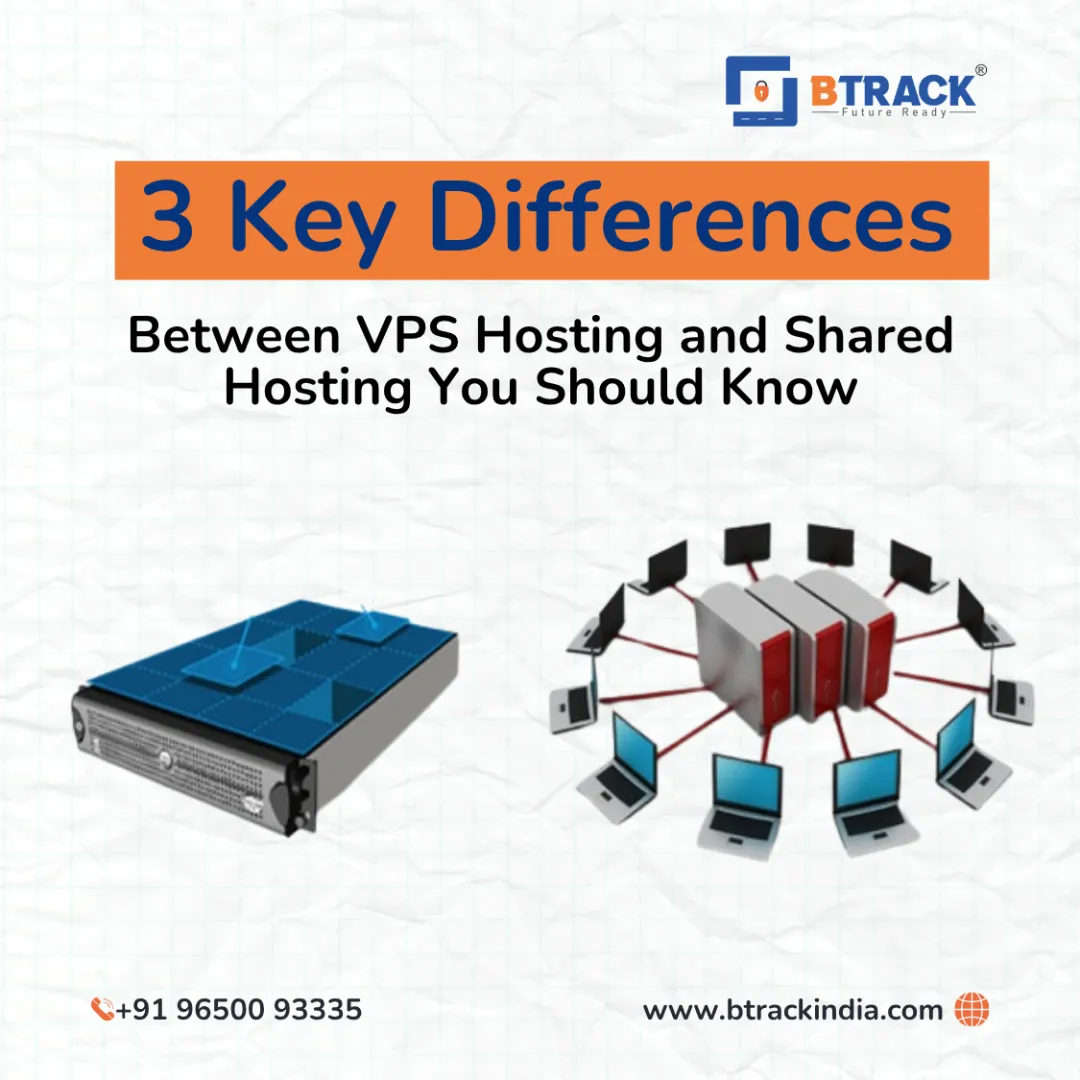
3 Key Differences Between VPS Hosting and Shared Hosting You Should Know
In today's digital landscape, choosing the right hosting solution is crucial for businesses seeking to establish a robust online presence. With numerous options available, two popular hosting types stand out: Virtual Private Server (VPS) hosting and shared hosting. This blog post from Btrack India Private Limited will explore the three key differences between VPS and shared hosting, helping you make an informed decision for your business's hosting needs.
Understanding Hosting Types
Before diving into the key differences, it's essential to understand what VPS hosting and shared hosting entail.
What is Shared Hosting?
Shared hosting is the most basic form of web hosting. As the name suggests, multiple websites share a single server's resources, including CPU, RAM, and disk space. This makes shared hosting an economical option for small businesses or individuals with minimal traffic and resource requirements.
What is VPS Hosting?
VPS hosting, on the other hand, involves a virtualized server that acts as a dedicated server within a larger physical server. Each VPS has its own operating system, allocated resources, and is isolated from other VPS environments. This setup offers greater control, flexibility, and performance compared to shared hosting.
Key Differences Between VPS Hosting and Shared Hosting
Now that we have a foundational understanding of both hosting types, let's explore the three key differences between VPS and shared hosting.
1. Resource Allocation
Shared Hosting
- Limited Resources: In shared hosting, all users share the server's resources. If one website consumes more resources, it can slow down or even crash the other sites on the server.
- Unpredictable Performance: The performance of your website may fluctuate based on the activities of other websites hosted on the same server. This makes it challenging to maintain consistent loading speeds and uptime.
VPS Hosting
- Dedicated Resources: VPS hosting allocates specific resources (CPU, RAM, disk space) to each user, ensuring that your website has the necessary resources to perform optimally.
- Stable Performance: Since resources are dedicated, the performance of your website remains stable, regardless of the activities of other sites. This leads to faster loading times and better user experiences.
2. Control and Customization
Shared Hosting
- Limited Control: With shared hosting, users typically have limited access to server settings and configurations. This can hinder your ability to install specific software or make customizations that may be necessary for your website.
- Pre-defined Environment: Shared hosting environments are generally pre-configured, which may not meet the specific needs of your website or application.
VPS Hosting
- Root Access: VPS hosting provides root access, allowing you to install and configure any software or applications that your business requires. This level of control is particularly beneficial for developers and businesses with unique needs.
- Customization Options: You can customize your server environment according to your requirements, which is essential for running resource-intensive applications or websites.
3. Security
Shared Hosting
- Shared Security: Security in shared hosting is a concern since multiple users share the same server. A vulnerability in one website can potentially affect all other sites on the server.
- Limited Security Measures: While some shared hosting providers implement basic security measures, the overall security of your website may be compromised by the activities of other users.
VPS Hosting
- Enhanced Security: VPS hosting offers better security features, as each virtual server operates in isolation. This means that if one VPS is compromised, the others remain unaffected.
- Custom Security Protocols: With VPS hosting, you can implement customized security protocols and measures tailored to your specific business needs. This includes firewalls, intrusion detection systems, and more.
When to Choose VPS Hosting Over Shared Hosting
Now that we have outlined the key differences, let's discuss scenarios where choosing VPS hosting is advantageous.
Scalability
If you anticipate growth for your business or expect a surge in website traffic, VPS hosting is the better option. It allows for easy scalability, enabling you to increase your resources without significant downtime or technical challenges.
E-commerce Websites
For e-commerce businesses, a reliable and secure hosting environment is crucial. VPS hosting provides the necessary resources and security to handle transactions and customer data effectively.
Application Hosting
If you're hosting applications or websites that require specific configurations, VPS hosting allows for the necessary control and customization to meet those requirements.
Conclusion
Choosing the right hosting solution is vital for the success of your online presence. While shared hosting may be suitable for small websites with minimal traffic, VPS hosting offers greater performance, control, and security.
At Btrack India Private Limited, we understand the importance of selecting the right hosting solution tailored to your business needs. Our VPS hosting services are designed to provide you with dedicated resources, customizable environments, and enhanced security measures, ensuring that your website operates smoothly and efficiently.
In summary, consider the following when choosing between VPS and shared hosting:
- Resource Needs: Analyze your website's resource requirements and growth potential.
- Control and Customization: Determine if you need greater control over your server environment.
- Security Concerns: Evaluate the security implications of hosting your website on a shared server.
Make an informed decision today and ensure that your business thrives in the digital world! If you have any questions or need assistance, feel free to contact Btrack India Private Limited for expert guidance on your hosting options.