
Deploy Linux and Windows servers for development, testing, and production. Ensure high availability, faster performance, and scalability.



















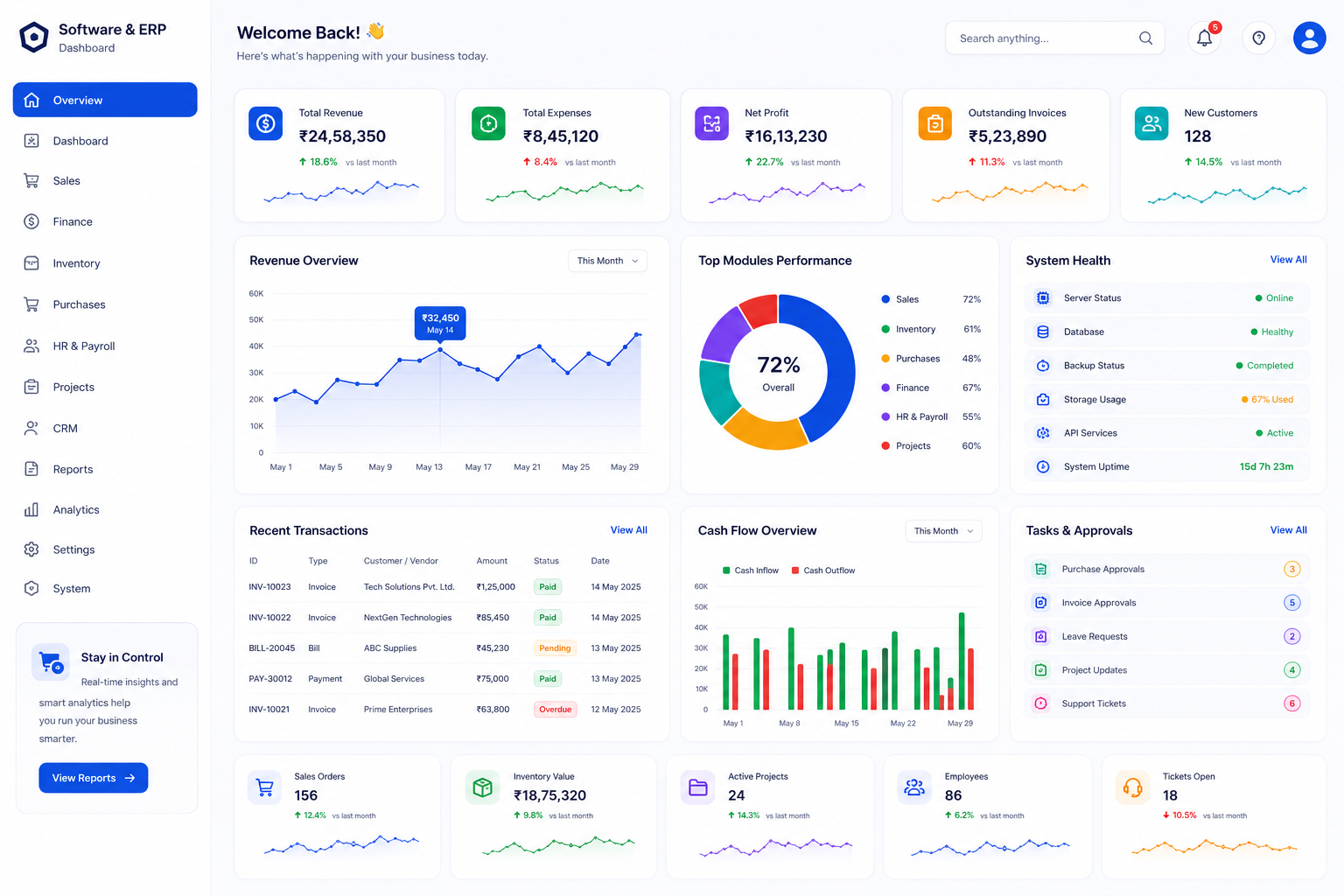
Our splendid dashboard keeps you up to date with what's happening with your server, your process, and the entire system, which always keeps you in control.
Our real-time analysis, desktop, and mobile dashboards help you be on top of things, no matter where you are.





They are using Reseller Hosting to host websites and Cloud Server Services which has allowed it more File storage. It is a Web & Mobile Development- Branding & Design services providing company.

Yugasa Software Labs is using Employee Productivity Tool, Email services on cloud, is one of the best mobile development company. it delivers quality apps for android and ios platforms to clients of every size.

TS Informatics is using Email services, VPS and much more services on cloud, is a professionally managed authorised and Exclusive engineering Company specializing in blending creative.

Orion Secure is using VPS and other services on cloud, is a diversified company that has built Security, covering every aspect from Guarding Services to logical security, Facility Management, Investigations, Training & VPS Secure Services in lower Verticals.

Talk to us to find out how we can help you achieve your IT objectives with the utmost security and peace of mind.
Have questions? We're here to help. Explore our frequently asked questions below for quick guidance and answers to common inquiries.
Development teams often need access to various types of resource such as Development and test environments, or new types of technology.In an IT Company A technical services team is responsible for provisioning these resources. When Into the cloud,development teams are empowered to quickly create virtual Machines and websites. Moreover, Cloud providers offer extra services that are Constantly updated and expanded.
The benefits of using cloud services is the cost saving you can achieve together With the ability to start you project small and increase your usage as needed. For example, the cloud doesn???t require any upfront investments-contrary to On-premise infrastructure or remote data centers,which require a significant Initial investment features such as auto-scaling, you will only get charged for the Extra service when it is running,and no costs will be added if you decide to scale Your operations down.
Cloud services offer a greater level of redundancy,which plays a critical role in Disaster recovery. Without the cloud, business that want to ensure excellent Disaster recovery need to provision a separate data center that requires an Additional investment. But this is not everything. This also need to setup the Tools to replicate data or provider backups required for restoring systems. Cloud Services can handle all of this out-of-the-box,without the need to invest in any sort Of infrastructure upfront. And the best thing is that you only pay for the hardware When you???re actually using it. This means that it???s possible to prepare and configure A disaster recovery environment before hand that will work perfectly when it is Needed.
Cloud services allow hosting an application???s data centers around the globe. You Can make sure the customer get the best possible performance of your application Regardless of where they are located at the moment.Businesses also use content Delivery network to increase their geographic reach,even if the application is hosted In a single location. This reduces the requests made directly to your application and helps to scale it better.
Server uptime is a term used to describe the amount of time that a web server is fully functional and online. When a server crashes or goes offline, all of the web sites hosted on it are also rendered useless until the problem is repaired.
Yes, you can backup your data
Most major web hosting providers have their own private data centers, in which all of their web servers are stored. Data Centers are specially designed to accommodate the environmental needs of a web server.
Cloud does not need any infrastructure set up to execute the process. In this a huge amount of money is saved.
With Cloud storage, the files and data you need are placed on highly secure remote systems stored in a provider's facility rather than on your computer's hard drive or local server. Internet access allows you to connect your computer or device to the remote Cloud solution to retrieve what you need.
Web applications developed using cloud computing (e.g. google app engine) offer inherent scalability. Also, application developers need not have to worry about the hardware setup, Hosting and maintenance. Being in cloud the web applications also ensure high availability.
Cloud ERP generally has much lower upfront costs, because computing resources are leased by the month rather than purchased outright and maintained on premises. Cloud ERP also gives companies access to their business-critical applications at any time from any location
Cloud ERP systems are superior to on-premises ERPs for several important reasons. Cloud ERP systems are accessible from anywhere, are nearly always online, and don't require the same company IT resources for maintenance and upgrades. In the long-run, cloud ERP solutions may offer cost savings and better performance.
Software developers will take advantage of public and private cloud to enhance company operations and develop better data storage systems. Along with learning a new programming language, developers are looking to move to the cloud to reduce costs, make data more secure, improve the quality of mobile sites and manage websites more easily